Space Nova Sales Strategy: How to Compare Prices Using PSF References
Industrial sales can feel oddly frustrating, even when the marketing looks straightforward. You see a headline price, you ask about availability, and then you get stuck staring at numbers that do not quite line up across units, floors, and layouts. The trick is to stop comparing “price” in isolation, and compare price through a consistent metric. In Singapore industrial sales, PSF references are often the only way to make different units talk https://ameblo.jp/khoojialefrl/entry-12977513676.html to each other.
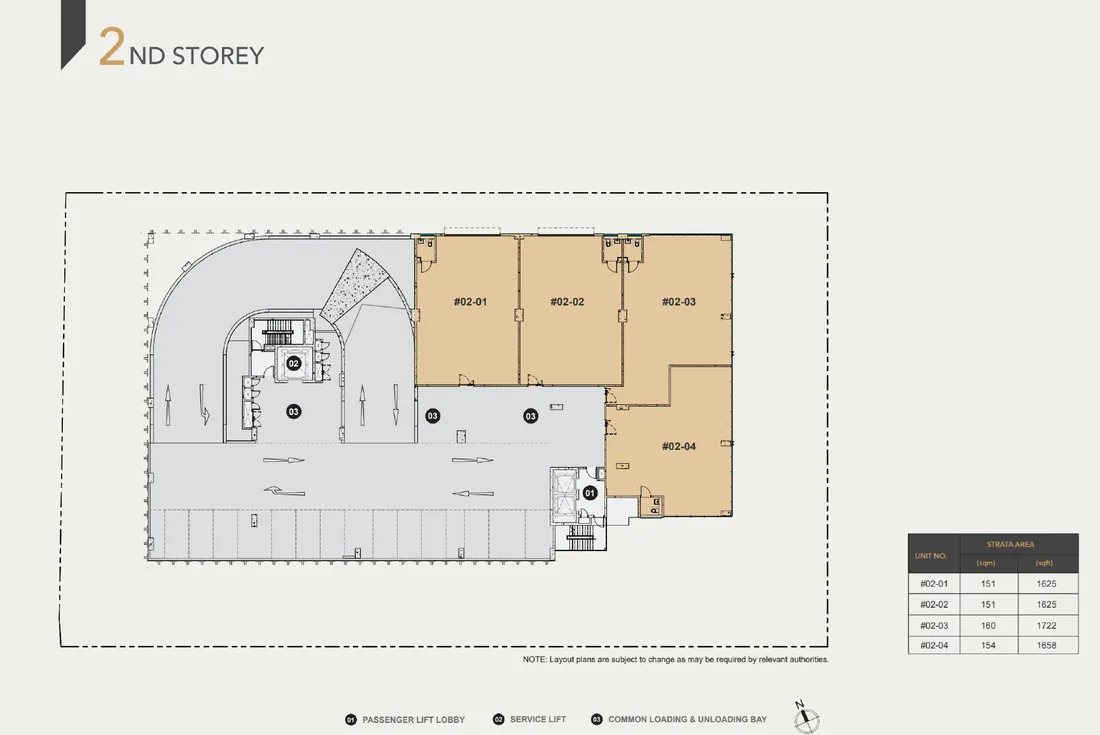
This is where Space Nova’s sales process becomes a useful case study. Space Nova is a freehold B1 (clean) industrial development at 21 New Industrial Road, Singapore 536208, developed by JVA NIR Pte Ltd. It comprises 47 strata units across 7 storeys, with expected completion or TOP around 2028 to 2029 depending on the page referenced. Unit sizes published for Space Nova run roughly from about 1,625 sqft to 2,917 sqft, and floor plans describe functional differences across levels, including ramp-up and loading or unloading access on lower floors, plus a communal sky terrace at Level 4. There is also an official site plan that lays out ground-floor operational components like loading and unloading bays, lifts, EV charging lots, and ingress or egress routing. When you combine all that, you can see why PSF comparison is not just a spreadsheet exercise, it is a sanity check before you commit.
Below is a practical strategy I use to compare Space Nova pricing across units using PSF references, with judgment calls that matter in the real world.
Start with the right “apples to apples” unit
Before you touch PSF, you need to confirm what area each unit’s price is based on. Space Nova’s official e-brochure is described as covering floor plans, unit strata areas, distribution chart, technical specifications, facilities, and connectivity information. That matters because PSF only becomes comparable if you are using the same definition of floor area across units.
In practice, I treat the strata area figure as the reference for PSF, since that is what gets published for each unit in official materials. If you are comparing a unit in one floor to another on a different level, your first question is always the same: “Are these prices both tied to the strata area stated in the brochure or the pricing page, or are we mixing in some other area definition?” The moment you mix area definitions, the PSF reference stops being a reference and turns into a misleading story.
If you are using Space Nova’s pricing page and the balance-units chart, be aware that availability changes frequently and remaining units by floor and type may shift. That means your PSF comparison needs to be grounded in the specific units currently offered, not in a unit list you saw last week.
Use PSF as a filter, not as the final decision
Space Nova’s official pricing materials and third-party listing pages both indicate indicative starting prices in the low-$2 million range and PSFs roughly in the mid-$1,000s to low-$2,000s, varying by unit and floor. Those ranges are useful, but I do not treat them like a target I can “solve.” Instead, I use PSF references as a filter to separate categories of value.
For example, you might notice that lower floors often command different PSF profiles than higher floors, not because the building is more or less “worth it” in some abstract way, but because the usability is different. Official floor plan descriptions indicate ramp-up and loading or unloading access for lower floors, while Level 4 includes a communal sky terrace. These are not cosmetic differences. If a unit’s https://telegra.ph/New-Launch-Industrial-Property-Singapore-GST-Considerations-for-Non-Residential-Purchases-09-01 practical workflow is better aligned with your operations, the unit may deserve a higher PSF even if the raw number looks expensive next to another listing.
So your approach should look like this:
- First, identify the PSF band for each unit you are considering.
- Second, confirm the functional advantages that may explain why that unit sits in a higher PSF band.
- Third, only then evaluate whether the premium feels justified for your intended tenant or your own usage.
PSF is a starting point, the story is in the layout and how the building operates.
Map PSF by floor and unit type using Space Nova’s operational design
A clean PSF comparison requires you to control for the “floor effect.” Space Nova has 7 storeys and 47 strata units. The official site plan lists operational elements that influence how units connect to the building flow: ground-floor units, drop-off, passenger and service lifts, bicycle parking, EV charging lots, loading and unloading bays, letterbox and bin centre, MCST office, electrical substations, and vehicular ingress and egress.
Even if you are comparing units that are not all at ground level, that site plan tells you the building’s intended operational pattern. In a well-designed industrial strata project, connectivity and logistics are built into the asset. PSF should reflect that, but only when you are consistent in how you compare.
A strategy I recommend is to build a “PSF by floor” view for yourself, even if it is informal. When you pull units from the pricing page and match them to the floor plan page descriptions, you are essentially running a mini dataset:
- Compare units within the same floor first.
- Then compare units across adjacent floors if their access and functional features are similar.
- Be cautious when you compare a lower floor unit with ramp-up and loading or unloading access to a unit on a higher floor that does not share the same practical logistics.
This caution is not theoretical. Industrial users, even small tenants, feel the cost of friction. A slightly higher PSF might be the difference between a smooth workflow and a daily inconvenience. That can show up in leasing demand, tenant stickiness, and how quickly you can re-let.
Build a PSF reference band for each shortlist unit
Because Space Nova’s PSF range is broad enough to vary by floor and unit type (mid-$1,000s to low-$2,000s), you need a personal reference band, not a single “market PSF” figure from a random snapshot.
Here is the workflow I use when I am comparing Space Nova pricing using PSF references, while staying grounded in the official materials:
- Pull the current unit list from Space Nova’s pricing page and balance-units chart, because availability can change quickly.
- For each shortlisted unit, record its asking price and the strata area stated in the official materials for PSF calculation.
- Calculate PSF as asking price divided by strata area, and then group the results by floor.
- Identify where each unit sits relative to Space Nova’s published indicative range (mid-$1,000s to low-$2,000s) and note which side of the band each unit falls.
- Adjust your interpretation based on whether the unit’s floor plan functional description suggests logistics advantages (like ramp-up and loading or unloading access on lower floors, or communal amenities such as Level 4 sky terrace).
That is the sequence that keeps PSF meaningful. You are not using PSF to chase the cheapest number, you are using it to understand which units are priced for their specific utility.
Remember PSF hides trade-offs, especially in industrial strata
One danger with PSF comparisons is overconfidence. PSF can make two units look “close enough,” and then you realize the floor plan differences change everything.
For Space Nova specifically, official floor plan notes suggest meaningful functional variation. Lower floors include ramp-up and loading or unloading access. Level 4 includes a communal sky terrace. Meanwhile, the site plan indicates the building has multiple operational components tied to lifts and ground-floor logistics. If one unit gives you an easier day-to-day process for loading, unloading, or movements, you can be willing to accept a higher PSF, because the higher PSF is effectively buying time and reducing bottlenecks.
Here are trade-off pitfalls I watch for when comparing PSF references across units:
- Comparing floors without considering different access patterns implied by floor plan descriptions
- Assuming two units have the same usability just because the PSF is similar
- Treating the starting price as the final price without understanding how unit mix affects negotiations
- Ignoring that availability changes quickly, so your “best comparison set” may shift
- Focusing only on PSF while underweighting building logistics shown in the site plan
The goal is not to become skeptical of PSF. The goal is to avoid turning it into a shortcut that skips the one thing PSF cannot measure well, operational fit.
Turn the “starting price” range into a decision framework
Space Nova’s indicative starting prices are described in the low-$2 million range, with PSFs roughly in the mid-$1,000s to low-$2,000s depending on unit and floor. When you approach those ranges with a decision framework, the numbers stop feeling random.
What you want is to know what you are paying for, and what you are not.
A useful framing is to decide what matters most for your plan, whether that plan is long-term ownership, leasing, or a business use. If your intended tenant base cares about smooth loading and less operational friction, you should expect PSF to reward that. If your tenant base is less sensitive to loading workflows and more focused on internal space and accessibility, the PSF premium might not be as necessary.
This is why I like to couple PSF comparison with actual viewing. Space Nova includes a showflat and a “book viewing appointment” flow on the official site, plus a video and sales gallery. Even if you do not catch every operational detail during a short visit, you usually confirm the shape of the experience quickly. The physical flow of a strata industrial unit tells you whether the PSF premium is about convenience or just about demand.
Use floor plan knowledge to explain PSF differences when clients ask “why”
In sales discussions, buyers often ask the same question: “Why is Unit A at a higher PSF than Unit B?” If you have not studied the floor plan notes, you will end up repeating marketing language. That does not land well with serious buyers.
A better approach is to anchor your explanation in the official floor plan and site plan descriptions.
For Space Nova, you can reasonably connect PSF differences to:
- Lower floors where ramp-up and loading or unloading access is described in the floor plans, which supports operational usability
- Level 4 where the communal sky terrace is described, which can influence tenant comfort and building experience
- Ground-floor operational infrastructure shown in the site plan, including loading and unloading bays, lifts, and vehicle ingress or egress
You do not need to overclaim. You just need to show you understand what the building is designed to do. When your explanation is grounded in those official descriptions, buyers stop treating PSF as a random number and start seeing it as a reflection of utility.
Keep an eye on “what you can actually buy” from the balance-units chart
In real transactions, the “best” PSF comparison set is often not the one you planned in your head. It is the one you can actually act on today.
Space Nova’s balance-units chart indicates that unit availability changes frequently and shows remaining units by floor and type. If you build a PSF spreadsheet based on a unit list that later sells out, you lose momentum and you may rush into a comparison that is not truly like-for-like.
A practical habit is to update your shortlist right before you place meaningful buying pressure, especially after you have checked the official balance-units chart and confirmed what the pricing page currently shows. This also helps you avoid regret if a unit you liked was at the edge of your PSF reference band but sold quickly.
Don’t chase the lowest PSF, chase the lowest justified PSF
If you want one rule that keeps your strategy disciplined, it is this: do not chase the lowest PSF number without a justification. The lowest PSF might indicate the unit is harder to lease, less convenient operationally, or simply more constrained in functional fit. PSF does not automatically reveal those issues.
In Space Nova, the official floor plan descriptions suggest some units are better positioned for logistics workflows, particularly on lower floors. That can justify a higher PSF. Conversely, if you find a unit with a lower PSF and you verify during viewing that the access and operational fit are still strong for your use case, then that lower PSF can be the value.
In other words, the “justified” part is where judgment lives. Your PSF reference band should guide you, but the building’s layout and your intended usage should decide.
How to use Space Nova resources without getting overwhelmed
Space Nova’s official site is built like a buyer journey. It includes an official e-brochure, project details, location information, floor plan pages, a site plan page, a pricing page, a balance-units chart, plus video and sales gallery. It also has showflat viewing appointment options.
When people tell me they feel overwhelmed, it is usually because they try to consume everything at once. A more effective way is to use the resources in sequence aligned with the PSF strategy:
First, confirm unit strata areas from the e-brochure or the floor plan context that ties to those areas. Next, use the pricing page and balance-units chart to capture current indicative pricing in the low-$2 million range and PSFs in the mid-$1,000s to low-$2,000s bands. Then, use the floor plan descriptions to explain functional differences, and the site plan to understand building logistics. Finally, use the video, sales gallery, and book viewing appointment process to validate what the documents suggest.
This sequence keeps your comparison anchored and prevents you from turning PSF into trivia.
A worked example framework you can replicate
Let’s say you have two Space Nova units on your shortlist, one on a lower floor and one on a different floor. You notice the higher floor unit is priced slightly higher, but the PSF is not dramatically different. At face value, they “feel comparable.”
Here is how you resolve that properly using PSF references:
- Calculate PSF using strata area published in official materials, and confirm you are comparing like definitions.
- Compare PSF within the same floor first. If the difference is mainly because one floor has more pronounced operational advantages, you have an explanation.
- Read the floor plan notes relevant to each unit’s level. If lower floors have described ramp-up and loading or unloading access, you should expect that to support a higher value proposition even if it is priced higher.
- If the higher PSF unit also aligns better with your loading, unloading, and daily movement needs, your “premium” may be justified rather than overpriced.
- If the lower PSF unit appears to meet your needs just as well during viewing, then you may have found the better deal even though it is not the cheapest number overall.
This framework stops you from arguing with yourself in circles. It also prevents you from making emotional decisions based on the unit with the nicer view in the sales gallery video.
What to do when PSF comparison still feels uncertain
Sometimes you will still feel uncertain, because PSF differences are only one part of the story and the official materials may not answer every question you care about. When that happens, you need to use the correct levers.
The most direct lever is the viewing appointment. Space Nova offers book viewing appointment options through its official site. Use that time to validate what the documents imply: access flow, how you would load and unload, and how your team would move through the building on a typical day.
The second lever is to re-check the balance-units chart. Availability changes quickly, so your comparisons should stay current. The third lever is to reframe the comparison from “which unit has the lowest PSF” to “which unit has the lowest justified PSF for my use case.”
That mindset shift is powerful. It turns uncertainty into a structured question, and structured questions get answered during discussions with the sales team and during your viewing.
Bringing it all together for a disciplined Space Nova purchase
Space Nova is a freehold B1 (clean) industrial project at 21 New Industrial Road, developed by JVA NIR Pte Ltd. It has 47 strata units across 7 storeys, with expected completion or TOP around 2028 to 2029 depending on the source. The range of unit sizes roughly from 1,625 sqft to 2,917 sqft, plus floor-by-floor functional differences described in floor plans, creates a pricing landscape where raw price comparisons can mislead.
PSF references fix that, but only if you apply them with discipline. Use current pricing data from the official pricing page and balance-units chart, compute PSF consistently using the strata area references, group comparisons by floor, and then use official floor plan and site plan descriptions to explain why a unit sits at a higher or lower PSF. If you do that, the numbers stop being intimidating and start being useful.
And once PSF becomes useful, you can do what serious buyers do: negotiate from clarity rather than confusion, and choose a unit where the premium, if any, actually buys you operational fit rather than just an extra digit on a pricing sheet.